
2027 North Iowa Behavioral Health Summit
Date: TBD
Time: TBD • Cost: TBD
Location: TBD
Continuing Education Credit offered: TBD
-
9:00 - 9:30 a.m.
Registration & Refreshments
-
9:30 - 9:35 a.m.
Welcome
-
9:35 - 10:35 a.m.
Community Crisis Response Team (CCRT)
John Derryberry & Angela Shapley
-
10:50 a.m. - 12:20 p.m.
Connection as Treatment: Understanding Loneliness and the Potential Role of the Human-Animal Bond
Katy Schroeder, PhD, NCC, University of Iowa & Shea Jorgensen, MD, Chief Medical Officer, Prairie Ridge
-
12:50 - 1:50 p.m.
Emerging Risks & Established Treatments In Opioid Use Disorder
Shea Jorgensen, MD, Chief Medical Officer, Prairie Ridge
-
2:00 - 3:30 p.m.
Opioid Overdose Education and Naloxone Training
Christine Riggert, BA, CPS -
3:30 - 4:00 p.m.
Person With Lived Experience

Presentation Info

Community Crisis Response Team (CCRT)
Description: A Community Crisis Response Team (CCRT) has launched in Mason City. This is a collaborative effort to better support individuals facing mental health and substance use challenges. This team connects people with the care they need, easing the burden on first responders and building a more responsive, compassionate system. Join us for a panel discussion to learn more about the critical role CCRT has within our community!


Connection as Treatment: Understanding Loneliness and the Potential Role of the Human-Animal Bond
Description: This session explores loneliness as a critical, yet often overlooked social determinant of health, highlighting its impact on physical health, mental health, and substance use disorders. Participants will learn why identifying and addressing loneliness in clinical settings is essential to improving overall patient outcomes. Presenters will also examine the potential role of the human–animal bond in mitigating loneliness. The session will review both the benefits and limitations of incorporating animals into patient care, as well as the practical and ethical considerations clinicians should weigh when discussing or recommending companion animals as part of an individualized, comprehensive approach to reducing loneliness.
Learning Objectives:
-
Describe the impact of loneliness on physical health, mental health, and substance use disorders.
-
Recognize loneliness as a key contributor to overall patient well-being.
Identify opportunities to address loneliness within clinical settings. -
Identify ways in which the human–animal bond may influence loneliness and social connectedness.
-
List the benefits, limitations, and potential risks of incorporating companion animals into behavioral health treatment plans, including considerations related to patient needs, capacities, and environment.
-
Apply practical considerations when counseling patients about the different strategies for incorporating animals into a broader care plan.
Emerging Risks & Established Treatments In Opioid Use Disorder
Description: This program will explore emerging opioid compounds, with a focus on 7-hydroxymitragynine (7OH), examining their pharmacologic effects and associated risks. We will address substances currently in use in North Iowa, and highlight clinical and public health concerns related to non-regulated opioid use. The program will also consider methadone and buprenorphine in the treatment of opioid use disorder, discussing their mechanisms of action and evidence supporting their role in reducing morbidity and mortality. Additionally, we will cover the newly opened Opioid Treatment Program and its role in addressing opioid addiction and improving patient outcomes.
Learning Objectives:
-
Describe emerging opioid compounds, including 7-hydroxymitragynine (7OH), and their pharmacologic effects and risks. Will explore substances being used currently in North Iowa
- Recognize clinical and public health concerns associated with non-regulated opioid exposures.
- Analyze the role of methadone and buprenorphine in the treatment of opioid use disorder, including mechanism of action and evidence for reducing morbidity and mortality.
- Introduce the recently opened Opioid Treatment Program and its role in opioid treatment.

Opioid Overdose Education & Naloxone Training
Description: In this training, you will learn about what opioids are and how they impact the body. You will gain an understanding of why some people develop an addiction to opioids and what the difference is between misuse and addiction. You will learn what the signs of an opioid overdose are, how naloxone works and how to administer it when necessary.
Learning Objectives:
-
Define various terms related to opioid overdose and naloxone.
-
Recognize the signs of an opioid overdose.
-
Demonstrate how naloxone works and how to administer.
-
Identify where to get naloxone in your community.

Hidden In Plain Sight
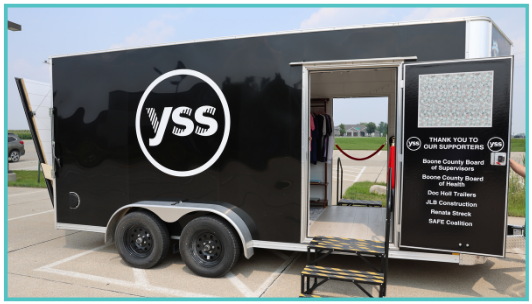

“Every parent, grandparent, aunt, uncle, babysitter needs to go see this! Unbelievable!”
The Hidden in Plain Sight Trailer is a mobile, interactive prevention experience that helps adults recognize signs of youth substance use. Designed to look like a real teen’s bedroom, the trailer features everyday items that may conceal or signal drug and alcohol use, showing how substances can be hidden in plain sight. Attendees must be 18 years of age or older.
Purpose
The trailer is designed to support education and early prevention efforts. It equips parents, caregivers, educators, and community members with knowledge to identify warning signs, start informed conversations, and support healthy choices before substance use escalates.
Why It Matters
Substance use trends change quickly, and many warning signs are easy to miss. Hidden in Plain Sight bridges this knowledge gap through a realistic, hands-on learning experience that strengthens community awareness, reduces stigma, and connects participants to prevention resources.
The setup is updated regularly to reflect emerging substances, trends, and concealment methods, ensuring the experience remains current and informative year after year.

Katy Schroeder is an associate professor and coordinator of the clinical mental health counseling master’s program in the Department of Counselor Education at the University of Iowa. She is a National Certified Counselor (NCC) and holds certifications from PATH International as an Equine Specialist in Mental Health and Learning and Therapeutic Riding Instructor. She also serves as a co-director of the Human-Animal Interactions for Wellbeing Collaborative, a University of Iowa Obermann Center Working Group on the Human-Animal Bond. Dr. Schroeder’s research, teaching, and clinical interests focus on the intersection of human–animal interactions and mental health. She has published and presented on the integration of therapy horse interactions in counseling and psychotherapy, as well as on a range of specialized topics related to the human–animal bond.

Dr. Shea Jorgensen is a community psychiatrist and serves as Chief Medical Officer at Prairie Ridge. She is board-certified in both psychiatry and addiction medicine and provides outpatient services, including for patients in the newly opened Opioid Treatment Program. Dr. Jorgensen also directs the Rural and Public Psychiatry Training Track at the University of Iowa, where she serves as adjunct faculty and helps train future psychiatrists in community-based and rural care.

Christine L. Riggert is a Certified Prevention Specialist and is currently the Prevention Supervisor at Prairie Ridge Integrated Behavioral Healthcare. Combined, she has over 13 years of experience in treatment services and her current prevention work. She enjoys being able to interact with an audience when presenting information and encourages discussion over lecture. Her goal in every presentation is that everyone learns something new.